
We went to see Wicked: For Good in the Majestic in King’s Lynn last week. The Majestic is a glorious survival from what I guess you might call the ‘golden age’ of cinema going. It was built in 1927 and is still running as an independent. There have been changes of course, the original auditorium is now split into two – the balcony closed off to become a smaller cinema which nevertheless still features the amazing original ceiling plasterwork of the original design, adorned with signs of the zodiac. Further screens have been fitted into the ballroom area and another more tiny space. But the foyer and circulation spaces still feel essentially like they must have done in the 1920s, with their mosaic floors, stained glass windows and original exterior doors. The box office doubles as the concessions counter, and it was crammed with families queuing to buy their tickets and their nachos and popcorn. Some of the kids had dressed up as their favourite characters from the franchise, and there was a party atmosphere.
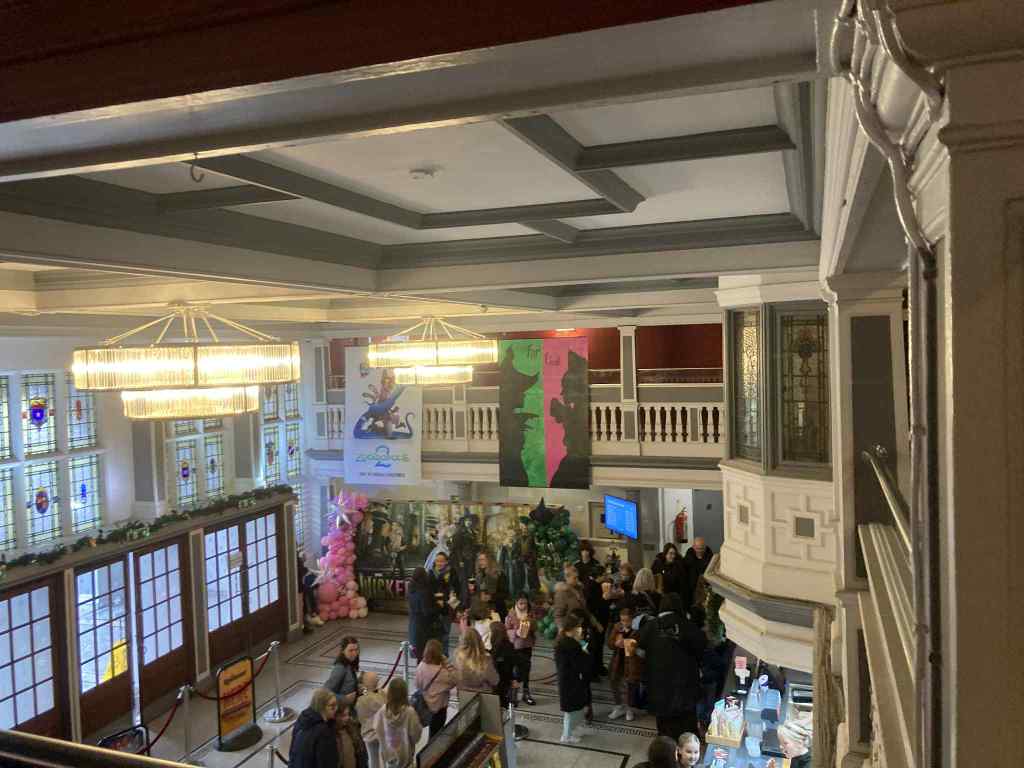
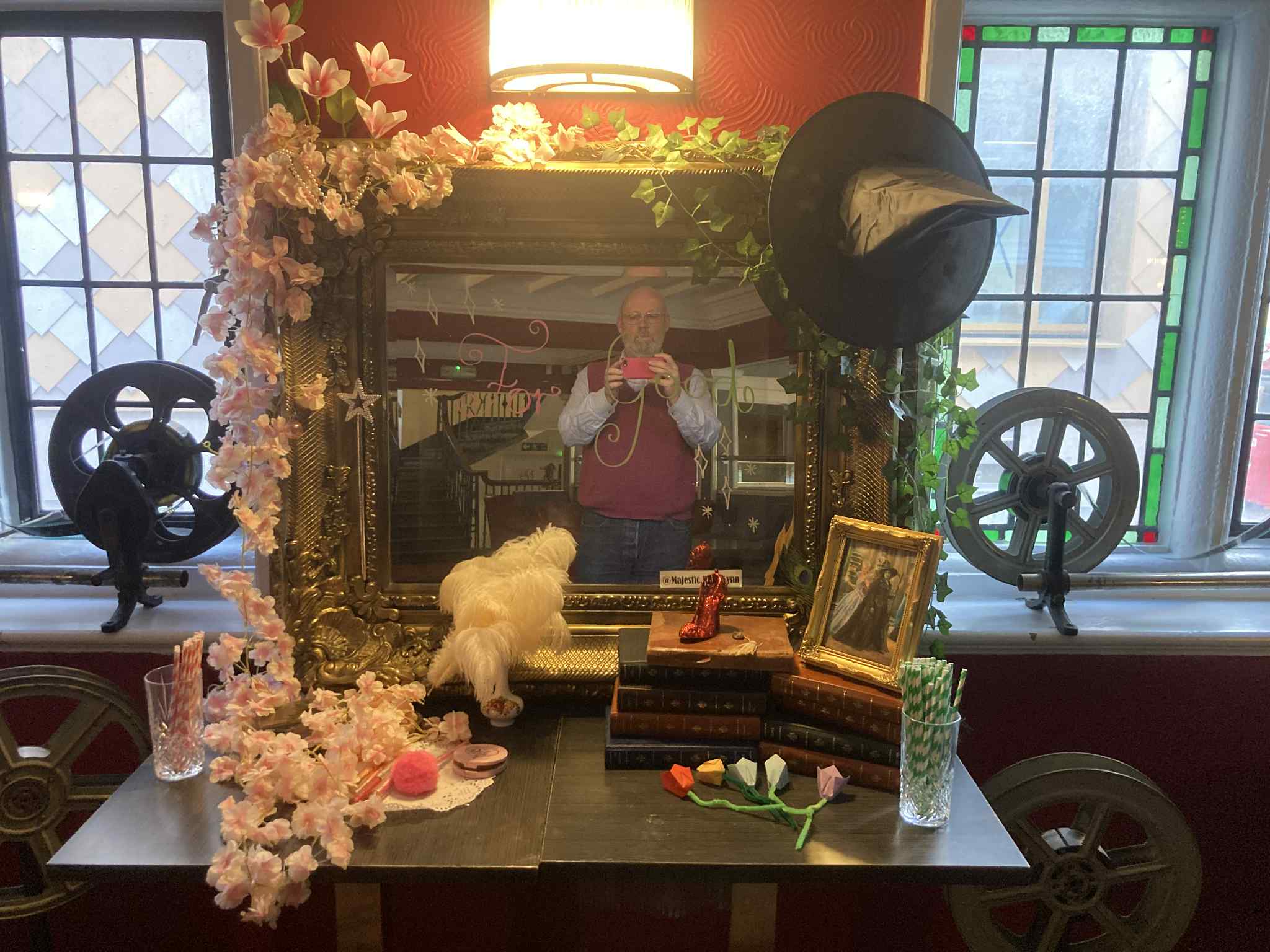
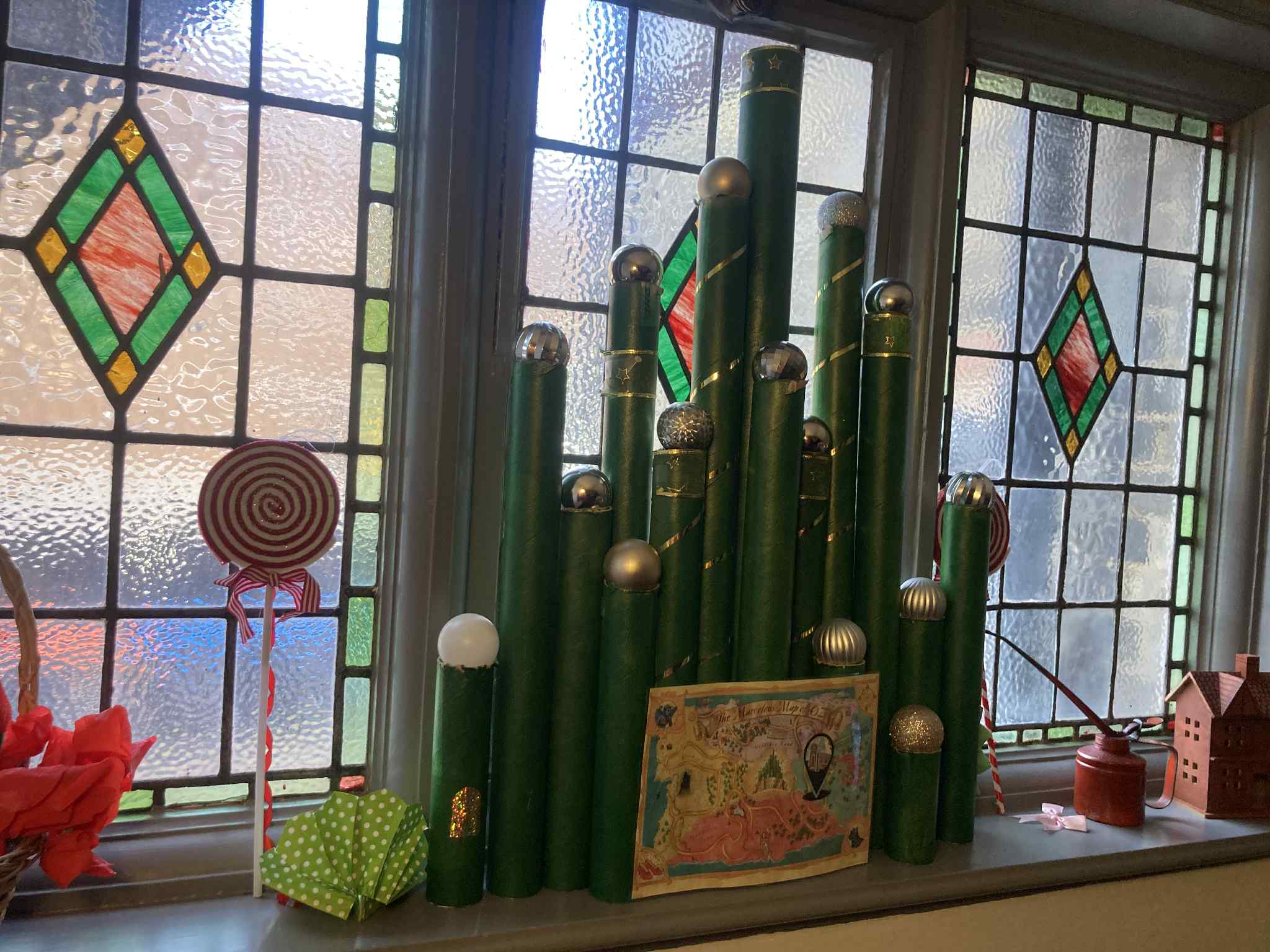
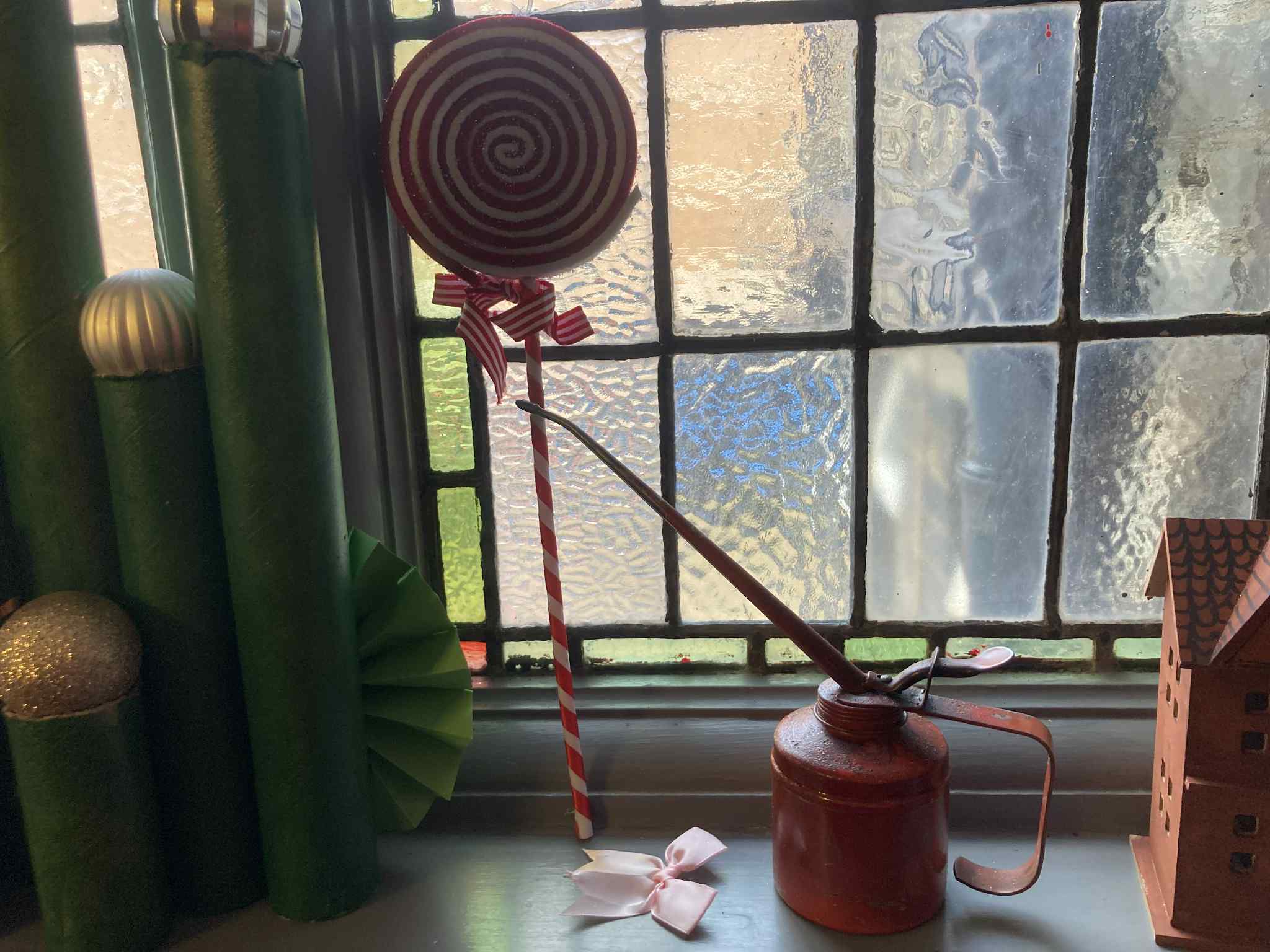
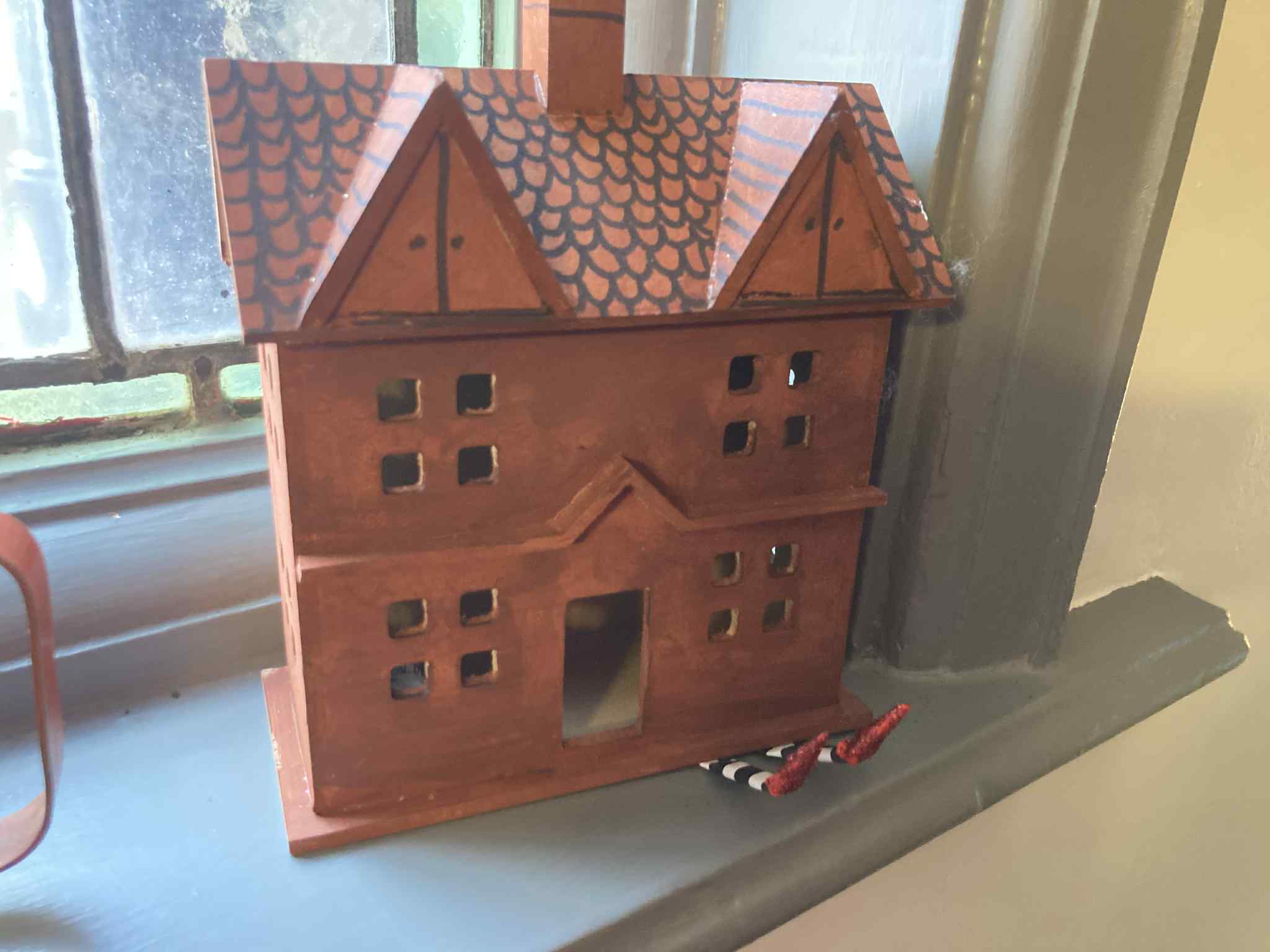
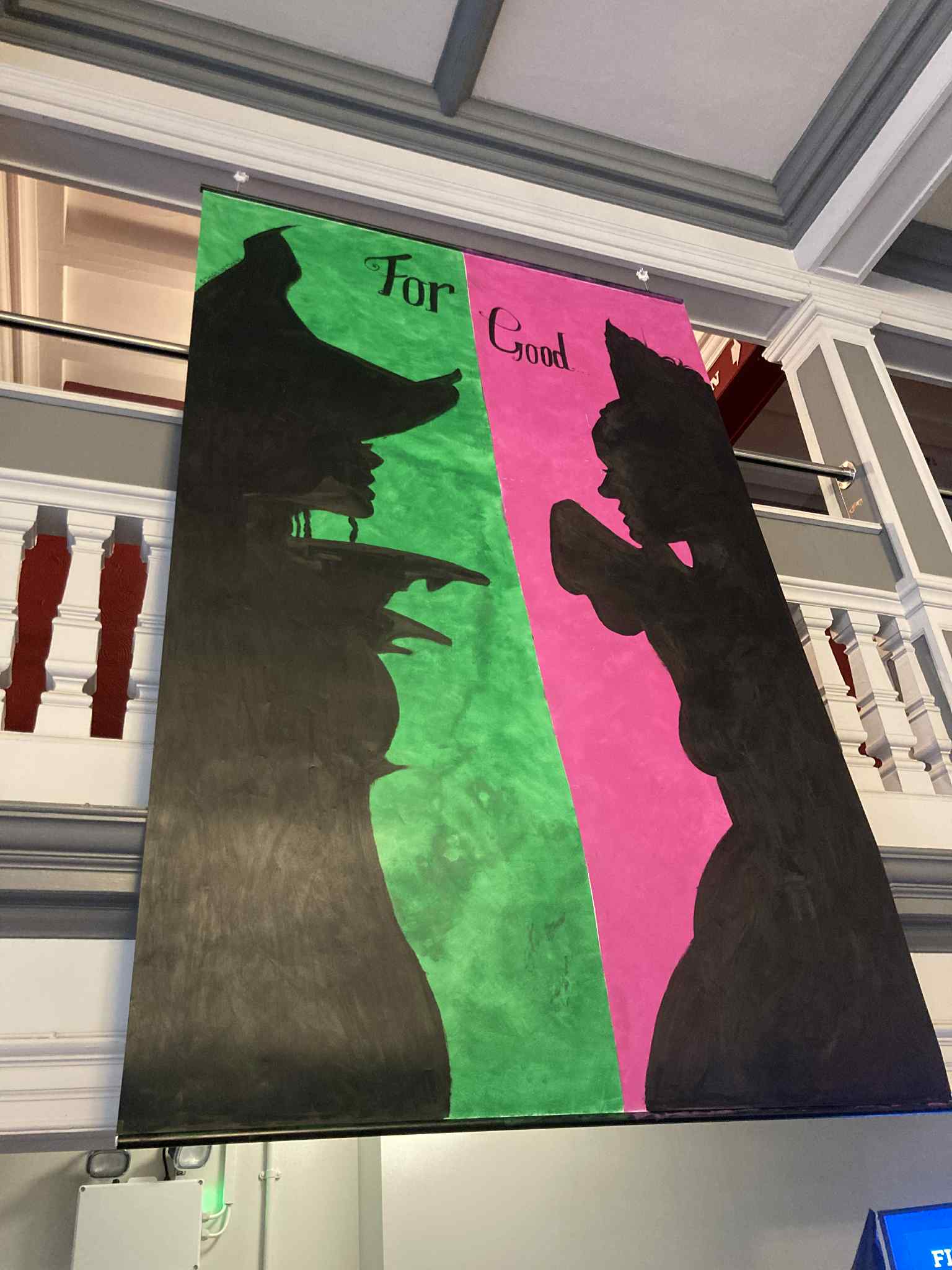
The thing I enjoyed most was the foyer displays which had all been done in-house, and had a home made charm which very much reminded me of the Showmanship reports you get in editions of Kinematograph Weekly from the 1930s and 1940s, where cinema managers sent in photographs of their own home-produced publicity displays in the hope of winning the coveted ‘golden baton’ and title of Showman of the Week. The Majestic’s displays included a shared vanity desk in the bar area, which had been dressed to match the official promotion standee in the main foyer – with one side representing Glinda with pink and white flowers and feathers and make up items, and the other representing Elpheba with green ivy, spell books and her witch’s hat. On a windowsill on the stairs landing, the Emerald City had been created using cardboard tubes painted green, and adorned with significant objects associated with the film’s characters – an oil can, a lollipop a basket that could be Glinda’s bubble couch with a wand nestling within it. The Christmas tree was adorned with Elphaba’s hat instead of a fairy, and a balloon sailed over the foyer area. I particularly liked a signpost with hand painted signs to the Emerald City, Shiz University, Kansas, Munchkinland and the Haunted Forest.

Such activities have a long history. The showmanship reports for the original release of The Wizard of Oz (1939) in the UK are relatively muted, coming as it did only a few months after the declaration of war. But for the re-release in January 1946 G.F. Wharton of the Essoldo, Newcastle upon Tyne created something that surely wouldn’t have looked out of place at the Majestic last weekend – he transformed the lounge of the cinema into a
“Wizard’s Cavern”, an exhibition in miniature containing life sized models of all the characters in the film. Sixteen thousand child and adult visitors to the cavern were shown around the exhibit and local charities benefited to the extent of £608.
(Kineweekly 31/1/1946 p. 49).
Other showmen were not content with just model characters – A. E Foster of the Forum, Ealing, persuaded two of his staff to dress up as the Tin Man and the Scarecrow and ride round the area on a motorbike ‘calling on local schools as the children left’ to persuade them to come along to the special screenings both after school and on Saturday morning (when they appeared in character again, entertaining the queue). (Kineweekly 10/1/1946, p. 33). Meanwhile in Atherstone at the Regal, the manager James Monk ran two competitions to publicise the film – a costume contest for the children, and for the adults a film quiz.
I see The Times has been clutching its pearls at the state of cinema in the wake of the success of Wicked: for Good.[1] In a typically mean spirited article it bemoans the success of PG rated films, worrying that they are crowding out the market for proper serious adult fayre. It’s a thinly disguised attack on the ‘TikTok generation’ who apparently are spoiling cinema for everyone else. ‘Contemporary cinemagoers’ it complains, ‘fully programmed by social media memes, now dress as their favourite characters, sing during their favourite songs and giddily record it all, often mid film for the online faithful.’ Apparently the fact that such behaviour is the norm is the reason why more worthy Oscar contenders have flopped at the box office.
I hate to break it to The Times, but cinema has always been primarily aimed at younger audiences, and those audiences have always actively responded to the films they enjoyed through a range of fan activities such as dressing up, singing along, indulging in creative collage activities such as fan scrap books, amateur fiction writing – and yes, even film-making. And in this they were actively encouraged by cinema managers who modelled such behaviour with their foyer displays and publicity stunts.
Nevertheless it seems the earlier equivalent of the PG certificate did cause some concern even for the earlier iteration of the Wizard of Oz story. That film was given an ‘A’ certificate necessitating that children should be accompanied by an adult into the cinema – evidently because of concerns about the scariness of Margaret Hamilton’s scenes as the Wicked Witch of the West. In 1946 the ABC chain noted the BBFC’s increasing tendency to favour the ‘A’ Certificate in such cases, and they lobbied individual local authorities to override the BBFC advice and certify the film a ‘U’. Kineweekly reports various authorities agreeing to this plan. Nevertheless, elsewhere cinema managers still found themselves in trouble. The Heaton Assembly Hall in Newcastle was fined £5 for allowing children into the film unaccompanied, despite the local police admitting that it was a children’s film (Kineweekly 16/5/1946, p. 19). Back in 1940 a similar problem had arisen in West Hartlepool when the Education Committee themselves got into trouble. They had arranged school parties consisting of several hundred school children a day to see The Wizard of Oz which was ‘regarded as an outstanding film of educational value’. However, although teachers accompanied the children as ‘adult escorts’, they were still found to be in breach of the law, which considered that adults should operate as ‘individual guardians’ when accompanying minors into ‘A’ certificate films.
[1] ‘Wicked: For Good and why PG-rated has never been more popular’, The Times 28/11/2025.
 At the Pictures